Fruit Cup Multipacks: Paper Sleeve or Shrink Film?
Fruit cups sell in multipacks, and the way you hold four cups together decides how the pack looks on the shelf, how much plastic it uses and how many people stand at the end of your line. Here is how a printed paper sleeve compares with shrink film and a carton, and what to plan for if you switch.
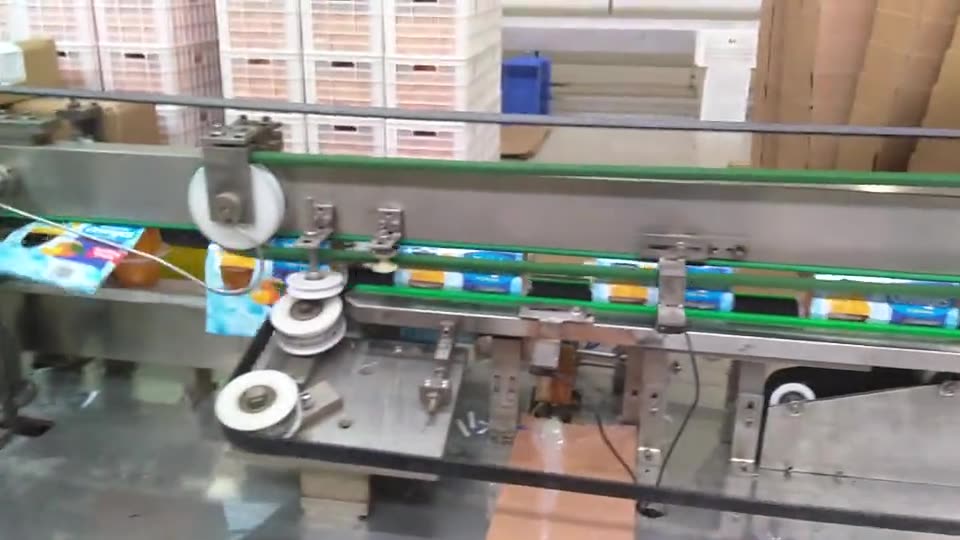
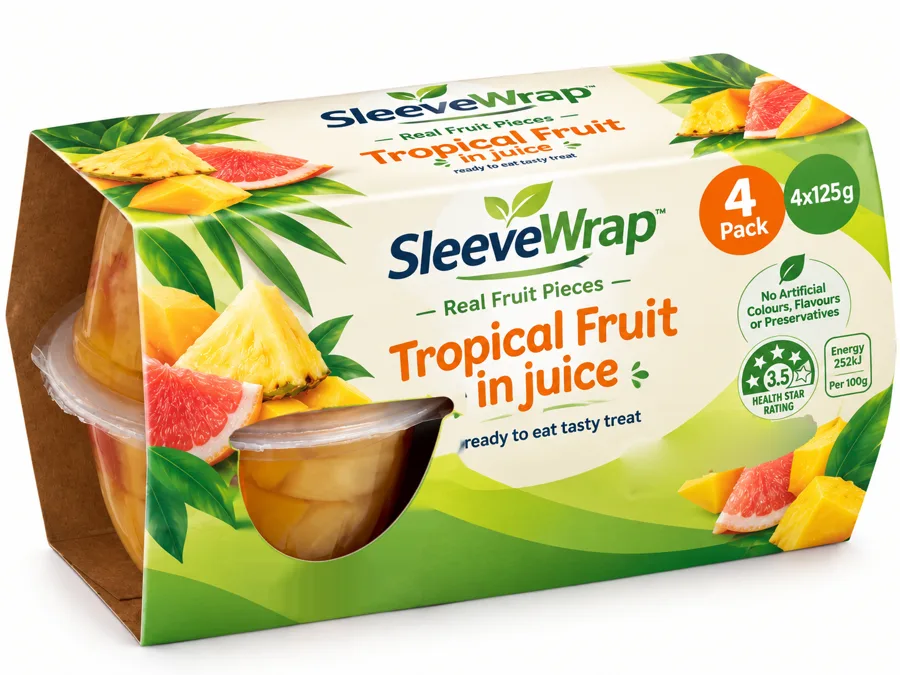
Three ways to bundle a fruit cup 4-pack
Most fruit cup producers choose between three packs. Shrink film wraps the group in plastic and shrinks it with heat. A folding carton boxes the cups completely. A printed paper sleeve, also called a cardboard sleeve or band, wraps around the group and holds it together, using far less board than a full carton.
| Shrink film | Paper sleeve | Folding carton | |
|---|---|---|---|
| Material | Plastic film | Printed paperboard | Printed paperboard |
| Board used | None | A band around the pack | A full box |
| Branding space | Printed film or a separate label | Most of the pack, with a window onto the fruit | All six faces |
| Shows the fruit | Through clear film | Through the window in the sleeve | Only with a cut-out |
| Needs heat | Yes: shrink tunnel | No | No |
Why fruit cup brands move to paper sleeves
- Less plastic on the shelf. The sleeve replaces the shrink film around the group, which answers retailers asking suppliers for less plastic packaging.
- A premium look. Printed board reads as a branded retail pack, with a window onto the fruit, rather than a bundle of cups.
- Plain lids and cups. Brand, nutrition panel and barcode go on the sleeve, so one plain cup and lid can serve several brands and markets.
- Shelf-ready packs. Packs go from the case to the shelf with no repacking at the store.
How the pack is built
The standard fruit cup multipack is four 4 oz cups: two upright and two inverted, stacked mouth to mouth so the lids face each other. That makes a compact block, 452 g net, that a sleeve can wrap tightly. The printed sleeve covers almost the whole pack, with a window that shows the fruit.
Where the sleeve wrapper sits in your line
On a fruit cup line, the sleeve is the last step before case packing. Cups are filled, sealed, pasteurized and date coded, then held in quarantine for 10 days or more. Only released cups go to the sleeve wrapper, so you never spend printed sleeves on product that fails release.
SleeveWrap takes the released cups at random from the conveyor. Two rotating aligners orient them, twin feeding screws stack four cups mouth to mouth, a sleeve is fed from the magazine and wrapped and closed around the group, and finished packs leave for case packing. Nobody places cups by hand.
Sizing it: one wrapper for four sealing lines
SleeveWrap is rated at 120 packs, or 480 cups, a minute. That is the output of four sealing lines running at 7,200 cups an hour each, so most plants need only one wrapper. At full speed it makes 7,200 packs an hour and 57,600 sleeved packs in an 8-hour shift. Plan sleeve stock and the case packer downstream for that rate.
See SleeveWrap and its capacity calculator →
Beyond the 4-cup pack
The 4 × 4 oz fruit cup pack runs in production today. The same machine is configured per project for single cups and bowls, 2 × 2 and 2 × 3 cup packs, can 3-packs and 6-packs, bottle 4-packs and jar 2-packs. If you also run cans or jars, one sleeving approach can cover more of your range.
What to send for a proposal
- A few sample cups with lids, filled if possible.
- Your sleeve artwork or the pack you want to sell.
- How many sealing lines will feed the wrapper, and their output in cups per hour.
- What happens after the sleeve: case packing, palletizing, or both.
We supply SleeveWrap alone for an existing line or as part of a complete fruit cup line, with installation, operator training, spare parts and the printed sleeves.
See the complete mandarin segment cup filling line →
Ready to drop the shrink film?
Send us your cups, your pack and your line output, and we will propose the sleeve wrapper and layout. Email sales@lionpackingsystems.com or call +1 314 250-8276.